Case Study Highlights
Industry: Mining & Thermal Power Generation
Application: Crusher & Conveyor Dust Collection
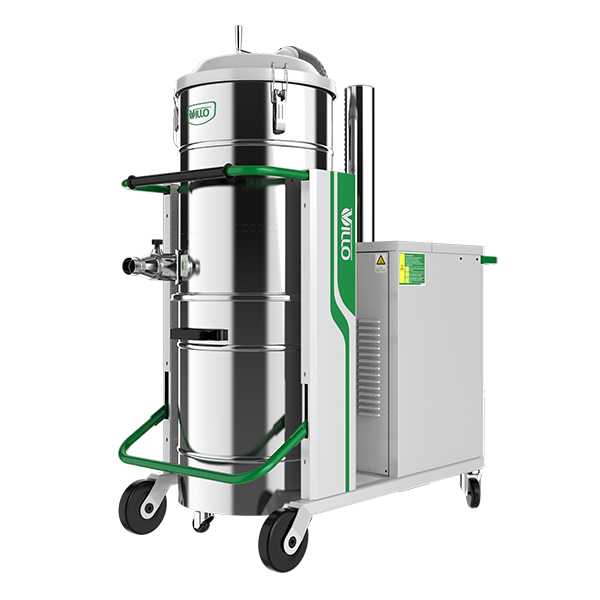
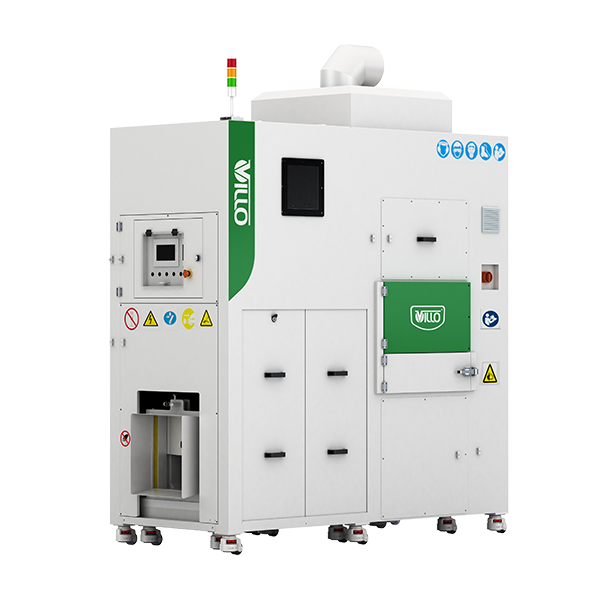
Dust Collector Model: VFO Series
Airflow Range: 12,000 – 23,000 m³/h
System Types: Localized Dust Collection / Centralized Dust Collection
Solution Provider: Villo Technology
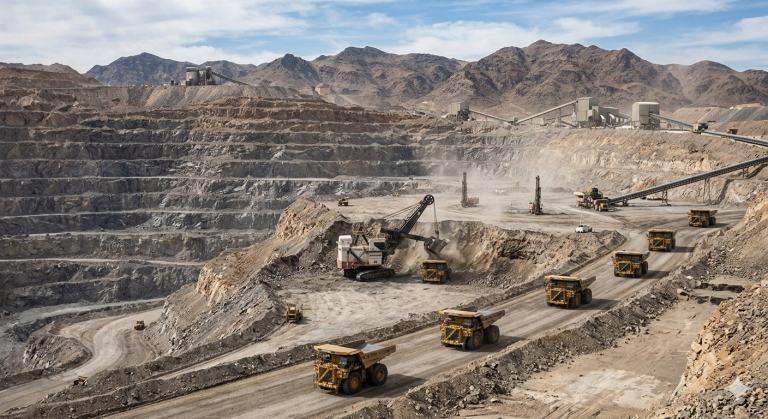
Dust generated during crushing and material handling operations is a common challenge in industries such as mining and power generation. Without proper dust control systems, airborne particulate matter can quickly spread across production areas, affecting equipment reliability, workplace safety, and environmental compliance.
To address these challenges, Villo engineered multiple dust collection solutions tailored for crusher systems in different industrial environments. The following case studies demonstrate how dust collection systems were designed and implemented based on plant layout, dust generation patterns, and airflow requirements.
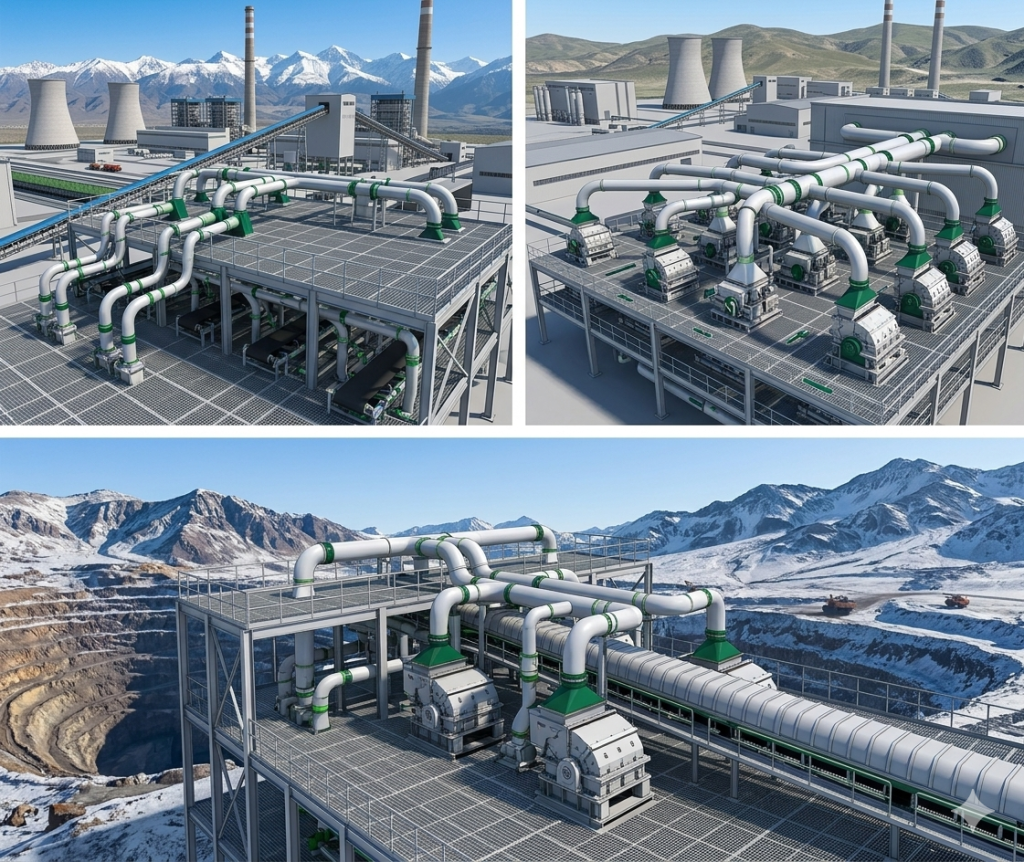
Dust Generation in Crushing Systems
Crushing processes are among the most dust-intensive operations in bulk material handling systems. Dust is typically generated during:
- Material feeding into crushers
- Crushing and fragmentation processes
- Conveyor belt transfer points
- Material discharge and screening
The generated particles are often fine and easily airborne, especially when handling materials such as coal, ore, or mineral aggregates.
If not captured efficiently, these particles can disperse throughout the facility, causing:
- Poor visibility in production areas
- Increased wear on equipment components
- Health risks for workers
- Non-compliance with environmental standards
As a result, properly engineered dust collection systems are essential for maintaining safe and efficient plant operations.
Engineering Challenges in Crusher Dust Collection
Designing a dust collection system for crusher applications requires addressing several technical challenges.
Multiple Dust Sources
Crushing systems often include multiple crushers and conveyor transfer stations, each acting as a separate dust emission point.
High Dust Load
Material crushing generates large volumes of particulate dust, which requires filtration systems capable of handling high dust loading without loss of performance.
Airflow and Static Pressure Requirements
Dust collectors must generate sufficient airflow and static pressure to capture airborne dust before it escapes into surrounding areas.
Complex Plant Layouts
Different facilities require different dust collection architectures, depending on equipment placement and available installation space.
In practice, this typically results in two design approaches:
- Localized dust collection systems
- Centralized dust collection systems
Engineering Solution by Villo
Based on site conditions and operational requirements, Villo designed dust collection systems using a combination of localized and centralized configurations.
Localized collectors are installed close to individual dust sources such as conveyors or crushers, allowing efficient capture at the point of generation.
Centralized collectors connect multiple dust sources through ducting systems, enabling a single filtration unit to serve several machines.
The choice between these configurations depends on factors such as:
- Number of dust emission points
- Required airflow capacity
- Available installation space
- Maintenance considerations
Case Study Projects
Case 1 – Conveyor Dust Control in Thermal Power Plant
Location: Kyrgyzstan
In this thermal power plant, dust emissions were primarily generated at conveyor transfer points feeding the crushing system.
System Design
To capture dust close to the source, localized collectors were installed directly near the conveyor transfer points.
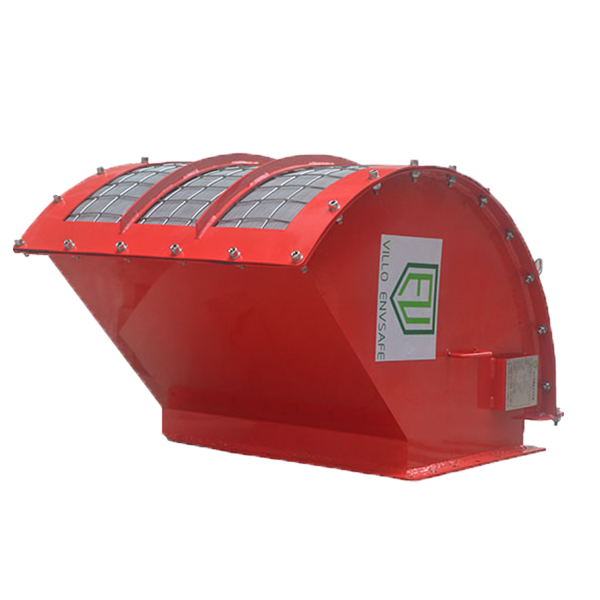
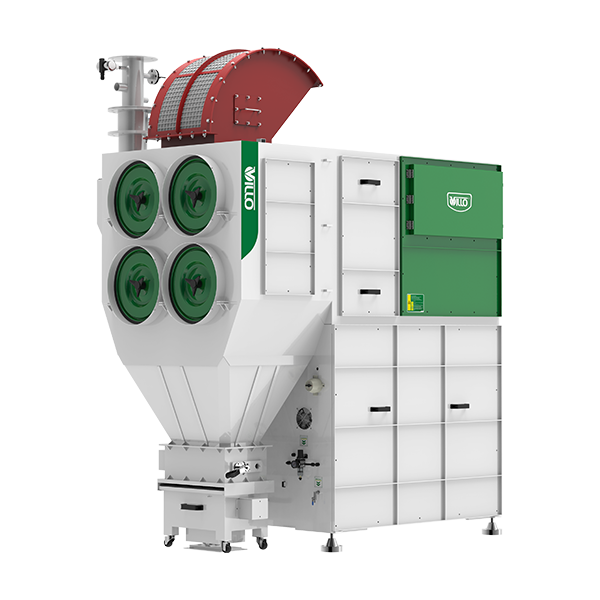
Equipment: VFO 3-12 Dust Collector
Technical Parameters
| Parameter | Value |
| Airflow | 12,000 m³/h |
| Static Pressure | 3500 Pa |
| Application | 4 collectors for 2 conveyors |
Case 2 – Centralized Dust Collection for Multi-Crusher Facility
Location: China
This crushing facility operates 12 crushers simultaneously, producing significant dust throughout the processing area.
System Design
Instead of installing individual collectors for each crusher, Villo implemented a centralized dust collection system connecting all crushers to a single high-capacity unit.
Equipment: VFO 4-16 Dust Collector
Technical Parameters
| Parameter | Value |
| Airflow | 18,200 m³/h |
| Static Pressure | 3111 Pa |
| Application | 12 crushers connected to one collector |
The centralized configuration simplified maintenance while providing sufficient airflow for multiple dust pickup points. Villo dust collector for cr
Case 3 – Crusher Dust Collection in Copper Mining
Location: Russia
Mining environments often involve continuous heavy-duty operation and high dust loads.
System Design
Dust collectors from the VFO series were configured to handle different conveyor arrangements within the crushing system.
Equipment: VFO 4-16 Dust Collector
Technical Parameters
| Parameter | Value |
| Airflow (Single Conveyor) | 13,000 m³/h |
| Airflow (Dual Conveyor) | 23,000 m³/h |
| Static Pressure | 3200 Pa |
This configuration maintained stable dust capture performance during both crushing and material transportation processes.
Dust Collection System Design Methodology
When designing dust collection systems for crusher applications, engineers typically follow several key steps.
1. Identify Dust Emission Points
The first step is identifying all major dust generation locations, including:
- Crusher feeding points
- Crusher discharge areas
- Conveyor transfer stations
Each point must be equipped with appropriate dust capture hoods.
2. Calculate Required Airflow
Airflow requirements depend on factors such as:
- Material type
- Particle size distribution
- Hood design
- Capture velocity requirements
Typical airflow for crusher dust collection systems ranges from 10,000 to 25,000 m³/h, depending on system scale.
3. Design Ducting System
The duct network must be designed to ensure proper air velocity while minimizing pressure losses. Key considerations include:
- Duct diameter
- Air velocity inside ducts
- Number of bends and branches
Maintaining adequate duct velocity helps prevent dust accumulation inside the system.
4. Select Dust Collector Capacity
Dust collector selection is based on:
- Required airflow capacity
- Static pressure requirements
- Dust loading characteristics
Proper sizing ensures stable filtration performance under continuous operation.
Results and Operational Benefits
The implemented dust collection systems delivered several operational improvements.
Effective Dust Suppression
Dust emissions from crushers and conveyors were significantly reduced.
Improved Working Environment
Cleaner air conditions improved visibility and workplace safety.
Stable Filtration Performance
Proper airflow and pressure design ensured reliable dust capture even under heavy dust loads.
Reduced Maintenance Complexity
Centralized systems simplified maintenance in large multi-crusher installations.
Conclusion
Crusher operations in mining and power generation environments generate significant dust, requiring carefully engineered dust collection systems.
Through optimized airflow design and flexible system configurations, Dongguan Villo Technology Inc. delivered dust collection solutions capable of maintaining reliable performance in demanding industrial conditions.
These projects demonstrate how both localized and centralized dust collection systems can be effectively applied to improve dust control in crusher operations.
Learn More
Learn more about Villo’s industrial dust collection solutions for material handling systems: